


How Real Estate Investors Buy LOTS of Properties With Special Financing
When I bought my first rental property back in 2006, DSCR loans didn’t exist. Not the way they do today, anyway.
I had to prove I could pay for that mortgage with my job. Then the second property. Then the third. By the time I got to seven or eight properties, banks could see every single loan sitting on my personal credit report. They didn’t care that I was cash flowing thousands of dollars a month. All they saw was risk. One bank flat out told me they didn’t want to lend to me anymore because I had too many loans already out there.
I want you to hear that, because if you’re feeling that same wall right now, trying to scale past your third or fourth property and running into banks that suddenly go cold on you, I’ve been exactly where you are.
Except now there’s a better way. It’s called a DSCR loan, and I recently sat down with Nick Tierno from Conventus to walk through exactly how it works, what it costs right now, and what to watch out for. I’m sharing that conversation with you here, because I genuinely believe this is one of the most important financing tools available to real estate investors today.
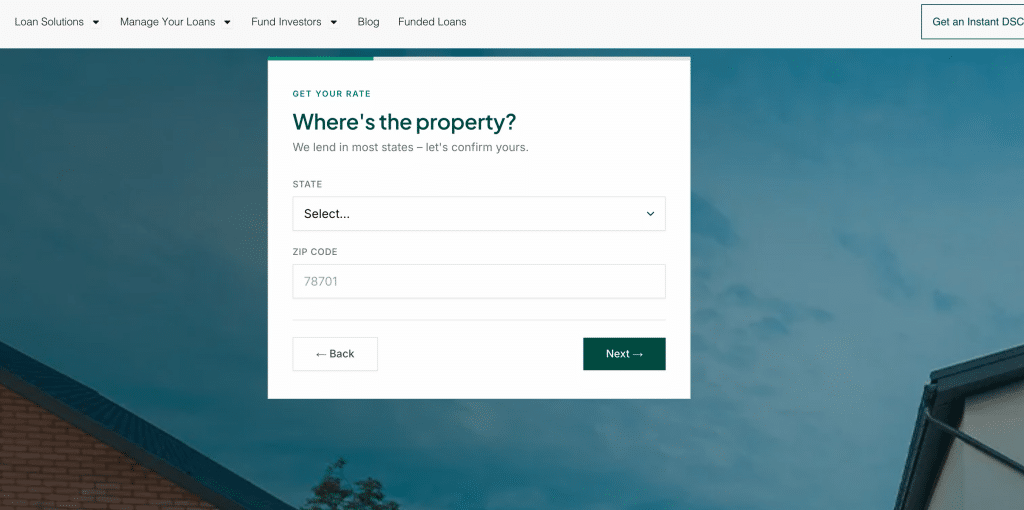
You can use Conventus Loan Estimator here:
What Is a DSCR Loan?
DSCR stands for debt service coverage ratio. In plain English, it means the loan is qualified based on whether the property itself can cover the mortgage payment, not whether you personally can cover it with a job.
Here’s how Nick explained it: a DSCR loan looks at your cash flow over your monthly mortgage payment. If the rental income covers the expenses and the loan payment, you’re in good shape. That’s the whole test.
Compare that to a conventional mortgage. If you’ve ever bought your own home, you know the drill. Two years of W-2s. Two months of pay stubs. If you’re self-employed, two years of tax returns for both your business and yourself personally. All of it gets checked against your debt to income ratio, which has to stay under roughly 47%.
Now stack a real estate portfolio on top of that. Every additional property you own shows up on your credit report, and a conventional lender wants to see two years of tax returns and 12 to 24 months of rent rolls for every single one of them. Nick told me he’s seen conventional investor loans take 60, 75, even 80 days to close because of all that paperwork.
With a DSCR loan, none of that is required. You don’t submit personal income documents. You don’t prove you can work a job to pay for the property. The property proves itself.

Making Money with Rental Properties FREE Investing Course
Get it FREE and Subscribe to the MPI Newsletter with loads of investing tips, advice, and advanced strategies for investing in real estate.
Why This Matters So Much As You Scale
I’ll be honest with you. When I was scaling to 10, 12, 15 properties, I had to get creative. Really creative. Because every conventional loan I took out made the next one harder to get, even though I was making plenty of money.
That’s the biggest hidden benefit of a DSCR loan that most people don’t think about until it’s explained to them: because the loan is a business purpose loan, made through your LLC or business entity, it does not show up on your personal credit report.
Think about what that means. If you want to buy a car, lease a car, or refinance your own home down the road, none of your rental properties are sitting on that credit report making you look risky. Your investing business and your personal financial life stay separate, the way they should.
Nick put it well: it becomes a protected asset in your portfolio through the business entity, which means you get to scale with a lot less personal risk attached to your name.
The Terms Right Now (And Why They’re Remarkable)
I want to be careful here, because rates change daily, and whatever numbers I share with you today may look different by the time you’re reading this. But here’s what Conventus was seeing on the day Nick and I recorded this conversation, just so you have a real benchmark.
Conventional primary mortgage rates were sitting around 6.5%. Conventus was closing DSCR loans in the low sixes, some as low as 5.875% to 5.925%, on standard terms with no extra points. That’s close to a full point cheaper than what a lot of investors are currently getting elsewhere.
A few other terms worth knowing:
- Minimum loan amount: $100,000 right now, though Conventus told me they’re actively working to bring that number down.
- Loan to value: Up to 80% on purchases and some rate and term refinances, 75% on cash-out refinances.
- Down payment: 20% minimum on purchases. The lower your loan to value, the better your terms.
- Maximum loan amount: Up to $3 million as a single asset loan, with portfolio loans going much higher. Conventus has done $5 million portfolio loans, and they’ll consider exceptions closer to $10 million.
- Loan structure: 30 year fixed rate, which is genuinely rare for what is functionally a business loan. Try finding a 30 year fixed commercial loan anywhere else.
- Closing speed: Nick told me about a brand new borrower who closed in 15 days, start to finish, in early July. He said that’s not the exception. That’s the norm at Conventus when a borrower comes prepared.
If you want to see what your own numbers might look like, Conventus built a free calculator that doesn’t require your social security number or a credit pull just to get an estimate. You put in the property details, the purchase price, and the location, and it gives you a real breakdown right away. I’ve had students use it and get an answer back in an hour or two. You can run it yourself at masterpassiveincome.com/conventus.
The Portfolio Loan Trick Every Scaling Investor Needs to Know
Here’s a piece of this conversation I got genuinely excited about, because it solves a real problem I’ve run into with my own students.
Let’s say you’re buying a property for $150,000. You negotiate it down to $120,000 because you always try to capture equity. Then you get a seller concession for a repair, and suddenly your loan amount is sliding below that $100,000 minimum. Now what?
Nick confirmed that if you’re buying multiple properties from the same seller under one contract, Conventus can bundle them into a single portfolio loan. Instead of paying separate legal and processing fees for each property, you pay once. That alone can get you above the minimum loan threshold and save you real money in closing costs.
This is exactly the kind of tool I teach my students to keep in their tool belt. I think of it like an electrician walking onto a job. They don’t carry one tool. They carry a whole belt of them, because every situation calls for something different. Sometimes that tool is private money. Sometimes it’s seller financing. Sometimes, like I mentioned to Nick, it’s literally been a credit card for me in the past, one I made sure would pay for itself before I ever swiped it. A DSCR loan, and specifically a portfolio DSCR loan, is one more tool that belongs on that belt.
The Interest-Only Option Most Investors Don’t Know About
One more detail from this conversation surprised even me, and I’ve been investing since 2006.
Conventus offers an interest-only option on their DSCR loans: interest only for the first 10 years, then fully amortized for the remaining 20, still on a 30 year fixed rate with no balloon payment and no variable rate attached.
Here’s why that matters. When I bought a large apartment complex years ago, we intentionally structured the loan as interest-only for the first year or two, because we needed runway. We needed time to turn units over, get them repaired, and bring them up to market rent before we started paying down principal.
That’s not about avoiding your principal payment forever. It’s about buying yourself breathing room while rents climb. If you’re making $1,500 a month in rent today, in 10 years that same unit could be renting for close to double. An interest-only period lets you take advantage of that runway, and nothing stops you from paying extra toward principal on your own schedule in the meantime.
If You’re Self-Employed, This Solves a Problem You Already Know About
If you’ve ever gone through a conventional mortgage as a self-employed borrower, you already know the pain Nick and I talked about. When you run your business the right way, working with a good CPA and taking every deduction you legally can, your tax returns often show a lot less income than what you’re actually bringing home. That’s smart tax strategy. It’s also exactly what tanks you when a conventional underwriter is calculating your debt to income ratio.
A DSCR loan sidesteps that entirely. Conventus doesn’t ask about your personal income at all. They ask about the property. What’s the rent? If it’s already leased, that number is your answer. If it’s not leased yet, they’ll pull market rent straight from the appraisal, using a form called a 1007, and qualify the loan off that instead.
That single difference means the same tax strategy that makes conventional lenders nervous has zero impact on your DSCR approval. Your business stays smart on paper, and your investing keeps moving forward.
What If You Don’t Know Real Estate Numbers Yet?
Here’s a benefit that even brand new investors should pay attention to. Conventus won’t approve a loan on a property that’s going to lose money. If the numbers don’t work, meaning the DSCR ratio falls below 1.0 and the property can’t cover its own debt, they’ll tell you so and decline the loan.
That might sound like a downside on the surface, but flip it around. It means every property that does get approved has already been vetted by a lender who works with investors every day and knows what a healthy cash-flowing property actually looks like. If you’re still building your own skill at running the numbers, that built-in check is protecting you from a bad purchase, not blocking you from a good one.
I always want to give you the full picture, not just the highlight reel, so here’s what Nick and I both flagged as the biggest things to watch for with any DSCR loan.
Appraisals. This is the one Nick brought up first, and I’ve seen it burn students before. DSCR appraisals are based on recent sales comps, ideally within the last six months and within two miles of the property. If the comp down the street is a six bedroom, four thousand square foot house and your property is a two bedroom, eleven hundred square foot rental, that comp isn’t going to hold up, no matter how much you want it to.
My advice, and I’ve said this to my students for years: whatever number you think your property is going to appraise for, shave 5% to 10% off your expectations before you go into the deal. If the appraisal comes in higher, great. If it comes in exactly where you planned even after trimming it down, you’re protected either way.
Being prepared as a borrower. Nick was clear that the fastest closings happen when the investor shows up with everything ready: photo ID, lease agreements, complete bank statements, LLC and entity documents, and enough liquidity in the bank to cover the down payment and closing costs before anyone asks. The borrowers who piecemeal their documents over days or weeks are the ones who end up with surprises right at the closing table.
Knowing your market. Conventus intentionally staffs representatives by region, so you’re talking to someone who actually knows your specific market rather than a call center reading from a script. If you’re investing in Nashville, you talk to their Tennessee rep, someone who can speak to comps and neighborhoods with real, on the ground knowledge. That local expertise matters more than people realize until they’re missing it.
Why I Recommend Conventus to My Students
I don’t say this lightly. I’ve coached thousands of students at this point, and I’ve worked with Conventus for years, including through our Income Building Live conferences. What I’ve consistently seen is a company that treats investors like partners, not like a box to check.
Once you’re a Conventus client, you stay a Conventus client. They told me directly that returning borrowers get reduced processing and legal fees and better pricing, because they’d rather earn your next loan and your referrals than squeeze every dollar out of a single transaction. If you’re already working with them on a fix and flip loan and you convert that same deal into a DSCR loan, you can get well over 100 basis points in discounts just for keeping it in-house.
That’s the kind of relationship I want my students working with. Not a lender who disappears after closing, but one who wants to be there for your fifth loan and your fifteenth.
If you want to see what a DSCR loan could look like for your next property, or your next ten, start here: masterpassiveincome.com/conventus. Run the free calculator, no social security number required, and let their team walk you through what’s possible.
Join Us for the Free DSCR Workshop
This interview only scratched the surface. There’s a lot more to cover with real diagrams, real numbers, and real examples that are hard to fully explain in an article or a podcast episode.
That’s why Nick and I are hosting a free live workshop on August 12th at 8:30 PM Eastern / 5:30 PM Pacific. We’re going to go deep on how to actually use DSCR loans to grow your portfolio, and you’ll be able to ask your own questions live.
You do need to register in advance to get the Zoom link. Register here: masterpassiveincome.com/conventus. And if you’re reading this after August 12th has already passed, that same link will take you straight to the replay, because my goal is to make sure you have this resource whenever you need it.
A Final Word
I think back to 2006, 2008, when I was scrambling to figure out creative ways to keep financing property after property, and I genuinely wish a tool like this had existed for me back then. It would have changed how quickly I was able to build.
You don’t have to figure this out the hard way like I did. The tools available to investors today are so much better than what I started with, and a DSCR loan might be exactly the piece your portfolio has been missing.
As always, talk to your own CPA or financial advisor about how any loan structure fits your specific tax and investing situation. But if you’re ready to see real numbers, go run the calculator at masterpassiveincome.com/conventus and have a conversation with their team. It costs you nothing to find out what’s possible.
Pumped to see you succeed!
Dustin Heiner Master Passive Income
Real Estate Investing Simplified 
5 Premium MasterclassesPremium online courses for any level of investor: beginner-advanced. Completely go at your own pace and can be taken through "Self-Study" or through "Membership". | Group CoachingInside the membership, attend live 90-minute Group Coaching sessions with Coach Dustin Heiner as he and the MPI Coaches teach you how to build a successful real estate investing business. | Investor CommunityConnect with the MPI Coaches and the other like-minded investors inside the MPI Mastermind Community. Ask questions about investing and get feedback how to be successful in your business. |
Join the Real Estate Wealth Builders Membership Today!


Get What You Need To Successfully Invest in Real Estate
Get All of the MPI Courses Plus Coaching!

6 Masterclass Courses
Premium online courses for any level of investor: beginner-advanced. Completely go at your own pace and can be taken through “Self-Study” or through “Membership”.

Group Coaching
Fast-track your investing success with access all past students’ work. Get access to the list of places to invest, business contacts, lenders, and resources other students have already found.

Investor Community
Work with MPI Coaches and Students inside the MPI Student Community.
Student Success Program
Pair up with another like-minded student for accountability, and crush your investing goals together.

Real Estate Wealth Builders
Get the coaching, education, community, and resources you need to become a successful real estate investor.